Need CAD Drawings or 3D Models?
Get professional CAD drawings, 3D models, and photorealistic renders delivered fast.
Global infrastructure spending is surging—from AI data centers and hospitals to power grids and water treatment plants. BIM is no longer optional—it's the baseline for major construction.
The shift extends beyond mandates. BIM Level 2 was actually made a mandatory requirement in April of 2016 on all publicly tendered projects in the UK.
France followed shortly after with their own mandate in 2017.
At level 2, all team members use 3D CAD models but sometimes not in the same model. It shall enable real-time monitoring of energy consumption, occupancy patterns, and system performance.
How much does BIM cost?
The cost of implementing BIM varies depending on the project’s size and complexity.
Smaller residential projects might cost around $5,000, while large commercial or infrastructure projects can exceed $100,000.
It ensures every stakeholder works from the latest data, improving collaboration, version control, and project transparency.
3. Issues that would take weeks to resolve on-site can be identified and fixed in days during the coordination phase.
From coordinated models, teams can extract Combined Services Drawings (CSD) that show exactly how different building systems interface—critical information for contractors during construction.
Beyond spatial coordination, BIM enables time-based planning through 4D BIM.
By linking the 3D model to the construction schedule, project teams can visualize how the building will be constructed over time. Integrating Building Information Modeling (BIM) with a Connected CAFM platform like Facilio turns design intelligence into ongoing operational value.
While BIM captures how a building is designed and constructed, Facilio extends that intelligence into real-time operations, bridging the gap between project completion and continuous performance.
Here’s how the two work together:
- Real-time asset visibility: Facilio connects BIM data with live asset performance, helping teams visualize and act on equipment conditions instantly.
- Automated maintenance: Model insights trigger work orders and predictive maintenance, ensuring issues are addressed before failures occur.
- Sustainability optimization: Facilio uses BIM’s building data to enhance energy efficiency and track sustainability KPIs.
- Smooth handover: Design, asset, and maintenance data flow seamlessly from construction teams to operations.
Together, BIM and Facilio move facility management from static models to living, adaptive ecosystems, where data continuously informs smarter, more sustainable decisions.
Who benefits most from BIM and Connected CAFM integration?
Building Information Modeling (BIM) delivers real value when extended into operations through a Connected FM platform like Facilio.
It is a highly collaborative process that allows architects, engineers, real estate developers, contractors, manufacturers, and other construction professionals to plan, design, and construct a structure or building within one 3D model.
Using a level 3 BIM model for digital clash detection— one of the primary uses cases for BIM.
It can also span into the operation and management of buildings using data that building or structure owners have access to (hence the Building Information Management).
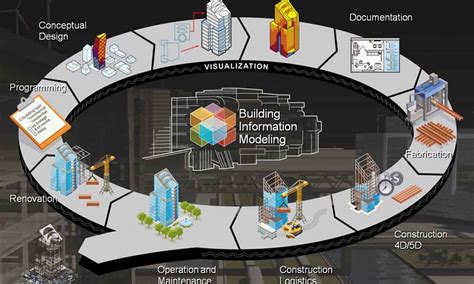
This is called Open BIM, meaning that another layer of protection is added against clashes, adding value to the project at every stage. Improved efficiency: Eliminate rework and accelerate delivery
BIM streamlines the entire project workflow by centralizing design data and automating repetitive tasks like material takeoffs and quantity estimation.
- Speeds up design approvals through accurate, up-to-date documentation.
- Reduces on-site rework caused by outdated or conflicting drawings.
- Enables parallel workflows, allowing teams to collaborate without waiting for sequential updates.
Pro Tip: Adopt a federated BIM approach, where each discipline contributes to a shared model.
Not entirely. Now, BIM (Building Information Modeling) is the standard— but it is much more than just a 3D model.
BIM objects
BIM objects, the components that make up a BIM model, are intelligent, have geometry, and store data. Level 6 BIM ensures accurate predictions of energy consumption requirements and empowers stakeholders to build structures that are energy efficient and sustainable.
Owners receive LOD 500 as-built models with facility management data in COBie format for operations.